Cooking recipes from different countries often use different measurement systems. An American recipe may list ingredients in fluid ounces, while a British or European recipe may use millilitres.
Understanding the difference makes it easier to follow recipes without guessing.
Common Kitchen Conversions
| Millilitres | US fluid ounces | US cups |
|---|---|---|
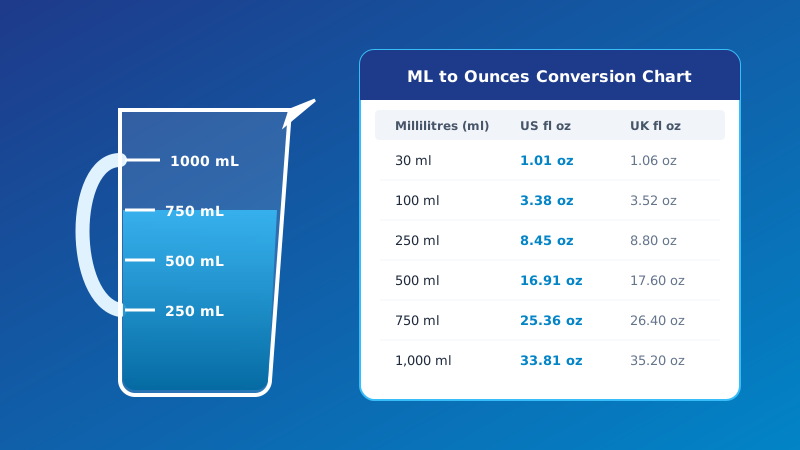
| 15 ml | 0.51 | 0.06 |
| 30 ml | 1.01 | 0.13 |
| 50 ml | 1.69 | 0.21 |
| 100 ml | 3.38 | 0.42 |
| 125 ml | 4.23 | 0.53 |
| 150 ml | 5.07 | 0.63 |
| 200 ml | 6.76 | 0.85 |
| 250 ml | 8.45 | 1.06 |
| 300 ml | 10.14 | 1.27 |
| 500 ml | 16.91 | 2.11 |
How to Convert ML to Ounces for Recipes
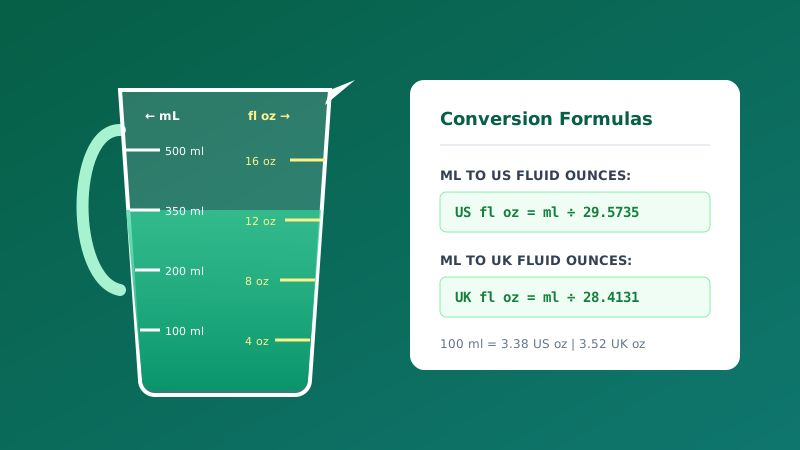
For liquid ingredients, divide millilitres by 29.5735296 to obtain US fluid ounces.
For example:
- 50 ml milk = 1.69 US fl oz.
- 100 ml water = 3.38 US fl oz.
- 250 ml cream = 8.45 US fl oz.
- 500 ml cooking oil = 16.91 US fl oz.
What About Flour, Sugar and Other Dry Ingredients?
This is where many cooking conversions become confusing.
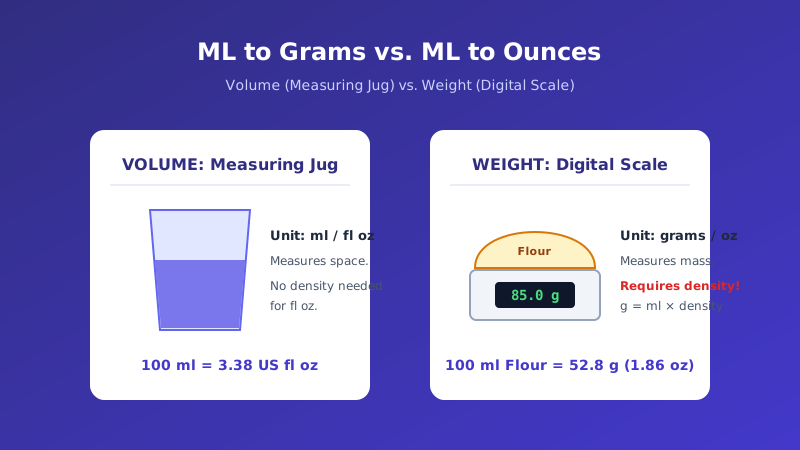
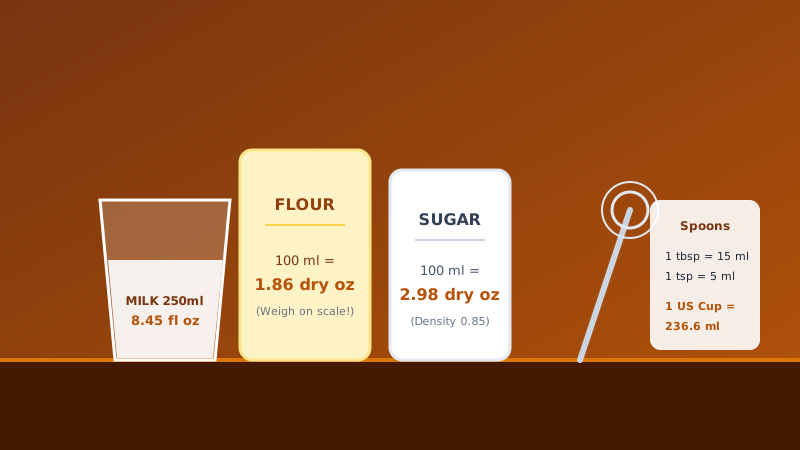
A measuring cup of flour does not weigh the same as a measuring cup of sugar. Even though both ingredients occupy the same volume, their densities differ.
For dry ingredients, use a kitchen scale or an ingredient-specific volume-to-weight conversion.
For example, converting 100 ml of flour into weight ounces requires knowing the type of flour and its packing density.
Are US Cups and Metric Cups the Same?
No.
- 1 US customary cup = approximately 236.59 ml.
- 1 metric cup = 250 ml.
This difference can affect recipes, particularly when baking requires accurate measurements.
Tips for Accurate Kitchen Measurements
- Use a liquid measuring jug for liquids.
- Use a kitchen scale for flour and other dry ingredients.
- Check whether the recipe uses US or UK measurements.
- Avoid treating fluid ounces as weight ounces.
- Use the same measurement system throughout a recipe whenever possible.
Use our ML to Ounces to Cups Calculator to convert kitchen measurements.