Drink containers are often labelled in millilitres, while recipes and serving measurements may use fluid ounces.
Knowing how to convert between these units makes it easier to compare bottle sizes and follow drink recipes.
How Many Ounces Are in Common Shot Measurements?
| Volume | US fluid ounces |
|---|---|
| 15 ml | 0.51 oz |
| 20 ml | 0.68 oz |
| 25 ml | 0.85 oz |
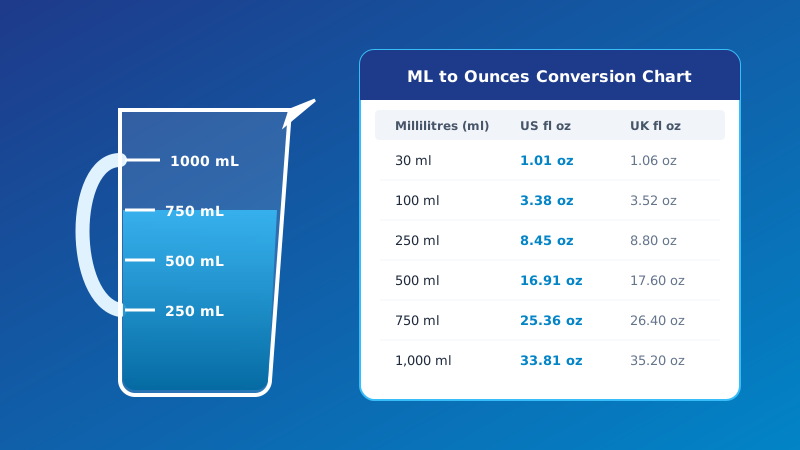
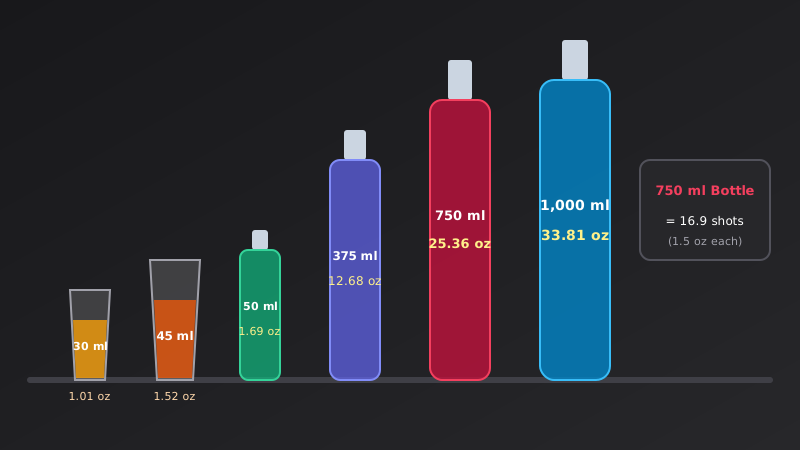
| 30 ml | 1.01 oz |
| 40 ml | 1.35 oz |
| 45 ml | 1.52 oz |
| 50 ml | 1.69 oz |
| 60 ml | 2.03 oz |
Serving sizes vary by country and establishment, so these are volume conversions, not universal definitions of a standard serving.
How Many Ounces Are in Different Bottle Sizes?
| Bottle size | US fluid ounces |
|---|---|
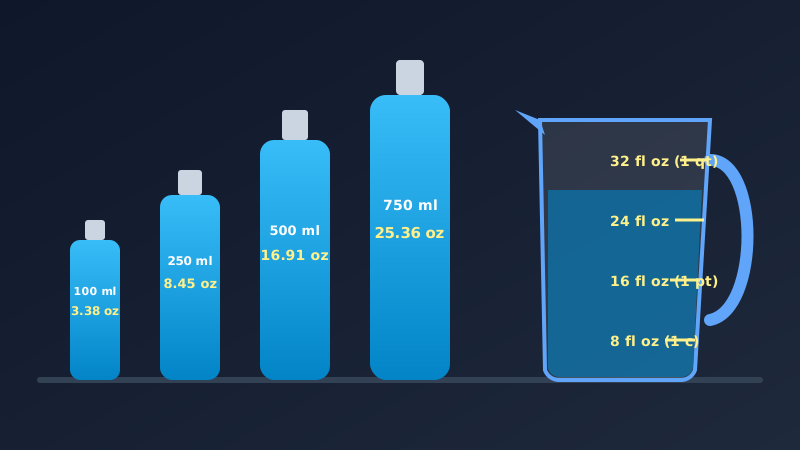
| 100 ml | 3.38 oz |
| 200 ml | 6.76 oz |
| 250 ml | 8.45 oz |
| 330 ml | 11.16 oz |
| 375 ml | 12.68 oz |
| 500 ml | 16.91 oz |
| 700 ml | 23.67 oz |
| 750 ml | 25.36 oz |
| 1,000 ml | 33.81 oz |
How Many Shots Are in a 750 ML Bottle?
The number depends on the serving size.
For example, using a 1.5 US fluid-ounce serving:
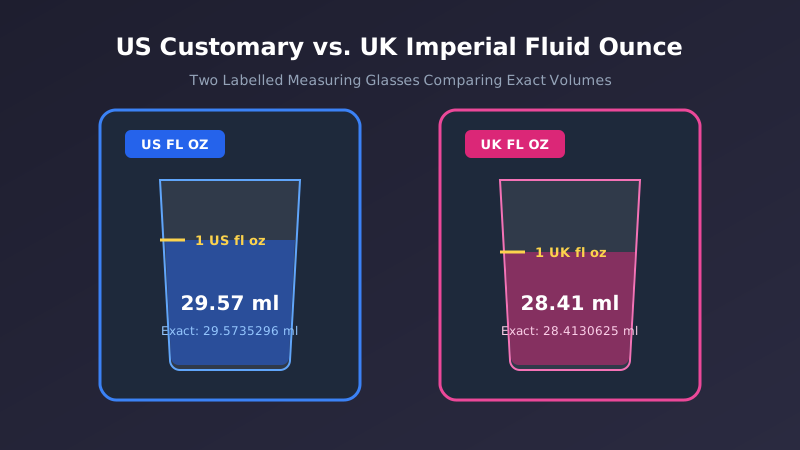
750 ÷ 29.5735296 = 25.36 fl oz
25.36 ÷ 1.5 = 16.91
A 750 ml bottle therefore contains approximately 16.9 servings of 1.5 US fluid ounces.
How Do You Convert ML to Ounces?
Use:
This formula works for liquid volumes regardless of the type of beverage.
Why Do Bottle Labels Use Both ML and Ounces?
Manufacturers often display both measurements because their products are sold in countries using different measurement systems.
Use our ML to Ounces Bartending Calculator for quick beverage measurements.